Bahasa Indonesia
 English

Workshop on Strengthening Science Teachers’ Competencies through Ethnoscience, Project-Based Learning, and the PISA 2025 Framework
Primary tabs
Submitted by admin on Fri, 2026-06-05 21:18
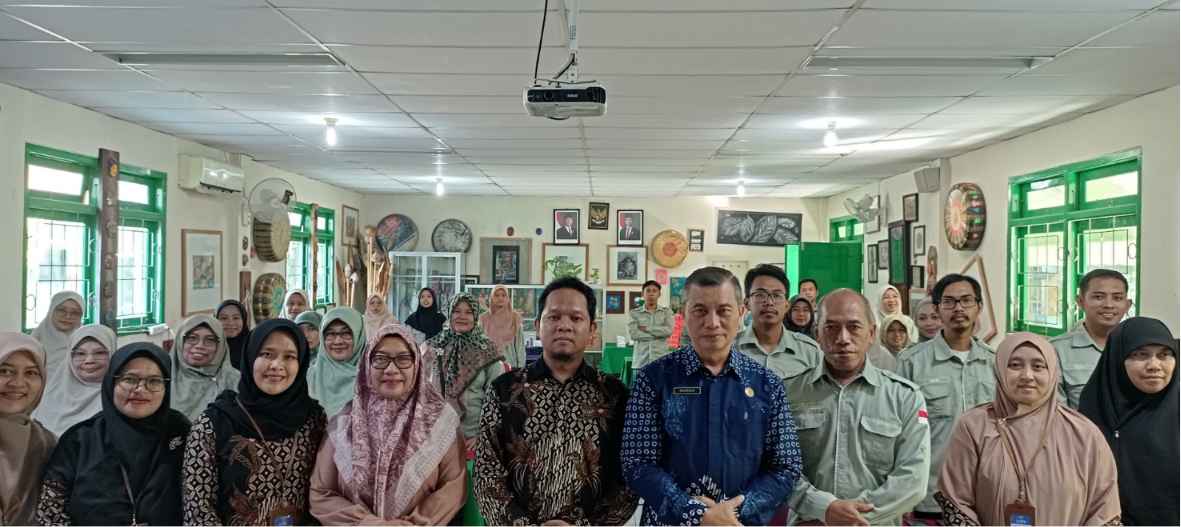
The Department of Science Education, Faculty of Mathematics and Natural Sciences (FMIPA), Universitas Negeri Yogyakarta (UNY), in collaboration with the Science Teachers Association (MGMP IPA) of Bantul Regency, organized a workshop entitled “Strengthening Science Teachers’ Competencies in Learning and Assessment Based on Ethnoscience, Project-Based Learning, and the PISA 2025 Framework.” The workshop was held on Friday, June 5, 2026, at SMP Negeri 1 Imogiri and was attended by 30 junior high school science teachers from across Bantul Regency. The workshop aimed to enhance teachers’ professional competencies in designing science learning and assessment aligned with the PISA 2025 Framework while promoting the implementation of contextual and meaningful scientific literacy-based learning.
The event began with an opening prayer, the singing of the Indonesian national anthem, and welcoming remarks from representatives of the Department of Science Education FMIPA UNY, the Head of MGMP IPA Bantul, the Principal of SMP Negeri 1 Imogiri, and the Head of the Bantul Regency Education, Youth, and Sports Office. The speakers emphasized the importance of strengthening scientific literacy, improving the quality of science education, and implementing contextual and engaging learning approaches to enhance students’ learning outcomes in science. The workshop continued with presentations delivered by lecturers from the Department of Science Education. The first session was led by Purwanti Widhy Hastuti, M.Pd., who discussed the PISA 2025 Framework and its implications for science teaching and learning. The second session was delivered by Dr. Rizki Arumning Tyas, M.Pd., who introduced ethnoscience-based science learning through the Ethno-Project-Based Learning (Ethno-PjBL) approach. One of the examples presented was the exploration of scientific concepts through local cultural products such as “jadah tempe,” enabling students to connect science concepts with their everyday experiences. The final session was conducted by Dr. Maryati, S.Si., who discussed the development of PISA-oriented assessments focusing on higher-order thinking skills and contextual problem-solving abilities.
Participants showed great enthusiasm throughout the workshop. The interactive discussion session allowed teachers to actively ask questions and share their experiences in implementing science learning in schools. Various challenges in applying Project-Based Learning were discussed, including unequal group participation, limited instructional time, and difficulties in strengthening students’ conceptual understanding during project implementation. The workshop concluded with an assignment for all participants as a follow-up activity to the materials presented. This assignment is expected to support teachers in implementing the knowledge and skills acquired during the workshop into their science teaching practices, ultimately contributing to the improvement of science education quality in schools.
Kontak Kami
Program Studi Pendidikan IPA
FMIPA Universitas Negeri Yogyakarta
Kampus Karangmalang Yogyakarta 55281
Email: s1pend_ipa@uny.ac.id
Instagram: @depdikipauny